 Over 20 years of experience in Sterile, Biological Pharmaceutical and Hospital Facilities Engineering Design, Construction and Validation.


18 Jul Fake Windows in Biotech Cleanrooms: Enhancing Morale Without Compromising Compliance
1. Introduction
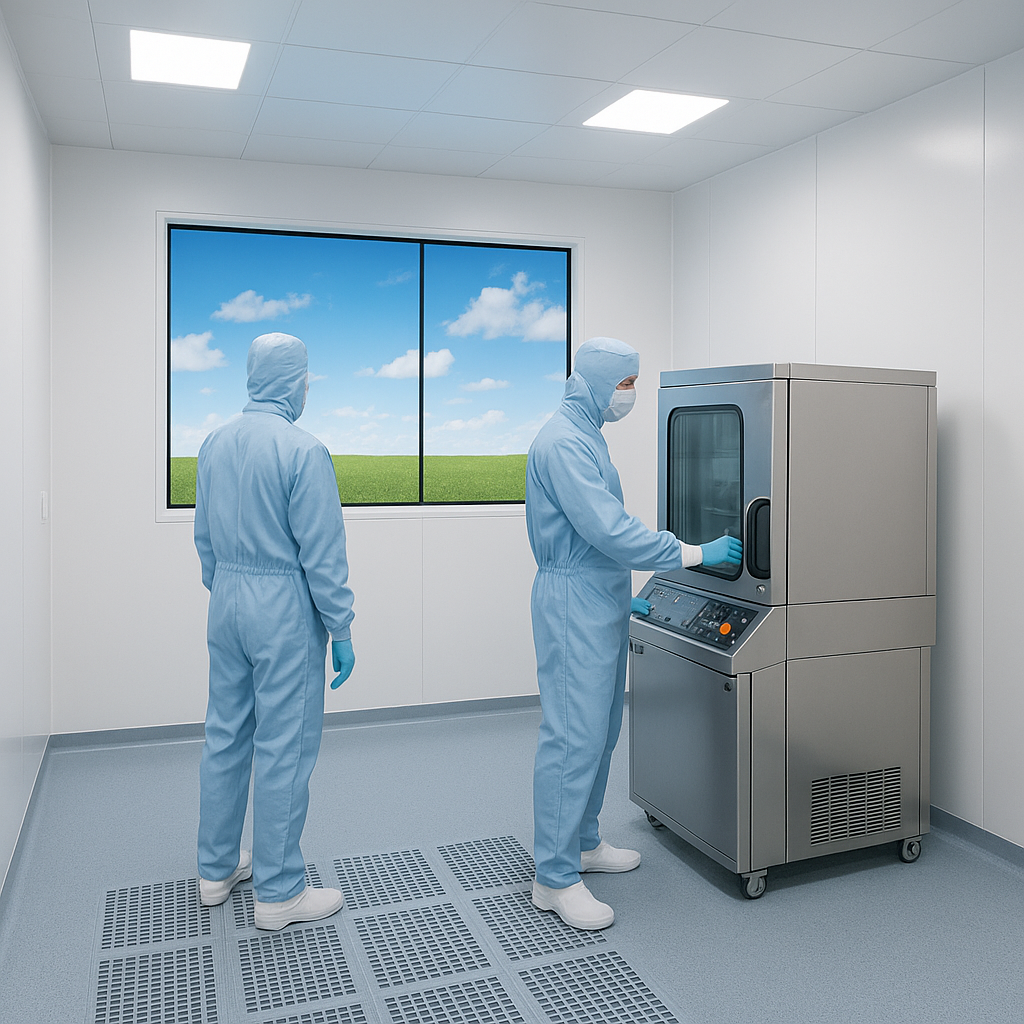
In cleanroom environments where controlled conditions are paramount, one element is often absent: a window to the outside world. Especially in biotech and pharmaceutical facilities where Grade B or C areas require stringent cleanliness, the use of fake windows—high-resolution displays simulating outdoor views—has emerged as a novel solution to enhance psychological well-being without compromising air quality or regulatory compliance.
2. Why Use Fake Windows?
Many cleanroom operators and maintenance staff work long hours in windowless environments. This can lead to a range of issues including:
- Reduced alertness and morale
- Disrupted circadian rhythms
- Perceived disconnection from time and nature
- By integrating fake windows, facilities can:
- Improve staff satisfaction and retention
- Reduce stress and fatigue
- Enhance perceived comfort without affecting cleanroom design integrity
3. Technical Implementation
Fake windows are usually composed of:
- High-resolution commercial-grade LCD or LED panels
- Embedded media players or PC-based control systems
- Backlit enclosures with anti-glare and anti-static coatings
- Custom content loops (natural landscapes, sky changes, etc.)
These systems are often integrated into walls or doors using flush-mounting kits, and enclosed in stainless steel or powder-coated frames.
4. Regulatory Considerations
Introducing electronics into clean environments raises valid concerns. For installation in cleanroom areas, especially ISO Class 7 (Grade C) or ISO Class 5/6 (Grade B), fake windows must comply with:
- GMP Annex 1 (EU): Materials must be cleanable, non-shedding, and resistant to disinfection agents
- FDA 21 CFR Part 211: Equipment must not introduce contamination risk
- ISO 14644-1/2: Particle limits must be maintained
This leads us to a key design question: how can fake windows be made cleanroom compliant?
5. Cleanroom Compatibility and Cleaning Considerations
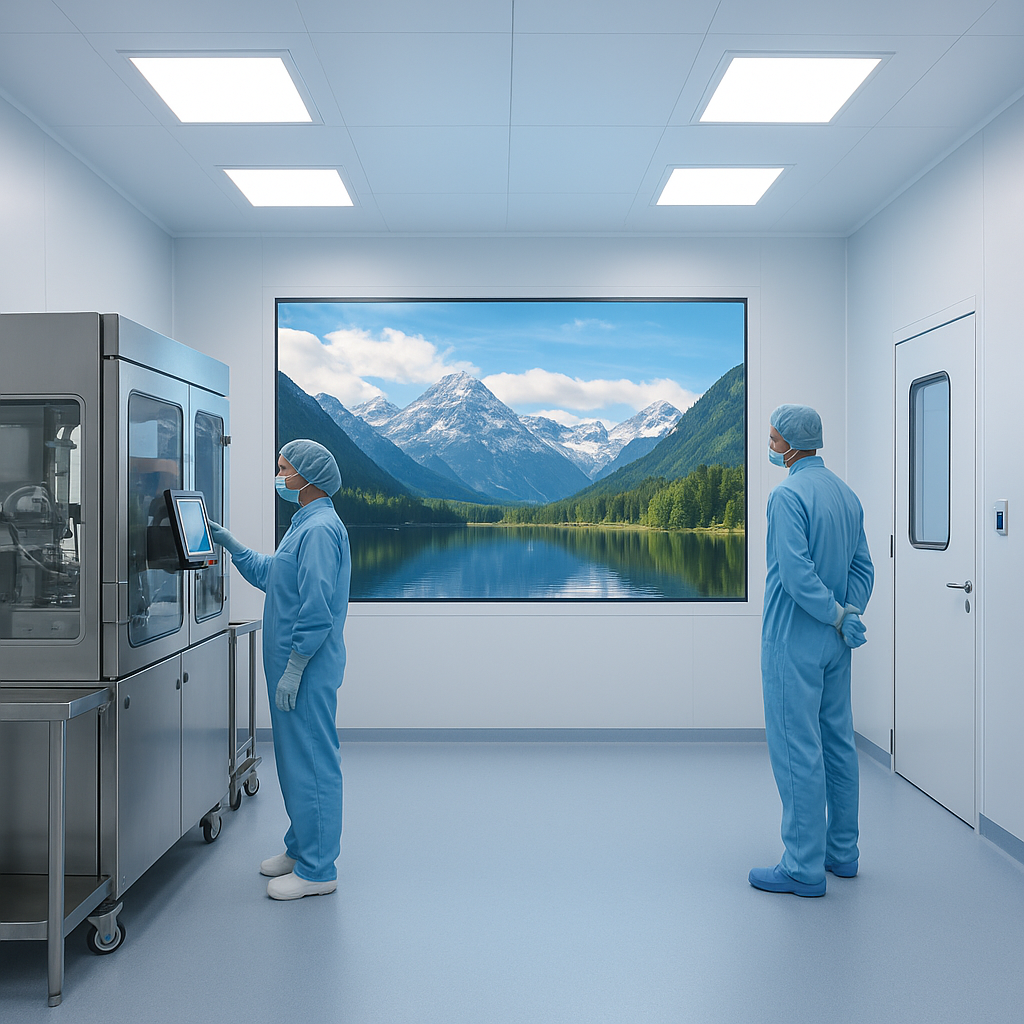
To be used inside or visible from a cleanroom environment, fake windows must be constructed to withstand cleaning protocols typical of pharmaceutical environments:
- Smooth, flush-mounted surfaces to avoid dust traps
- Sealed enclosures (IP65 or higher) to protect from cleaning agents
- Use of GMP-compliant materials such as stainless steel or coated aluminum
- No active ventilation that could disrupt airflow patterns
- External control via sealed touch panels or remote interfaces
- Compatibility with sporicidal agents and alcohol-based cleaners
These requirements ensure that the fake window behaves as any wall element from a contamination control standpoint, and can be cleaned just like pass-throughs or HMI panels.
6. Limitations
- Heat generation from displays must be accounted for
- Glare or brightness issues in low-lux environments
- Cost and maintenance (e.g., pixel failures)
7. The Future of Fake Windows in GMP Facilities
As biopharma design continues to evolve with a focus on human-centric design and automation, fake windows are likely to become more common. Integration with IoT platforms, dynamic time-of-day visuals, and synchronized ambient lighting systems are just the beginning.
Their success depends on careful engineering that preserves cleanliness, ease of sanitization, and compliance.
8. Conclusions
Fake windows offer a smart and elegant solution to a common problem in cleanrooms: disconnection from the outside world. With proper design and validation, they can enhance working conditions in biotech and pharmaceutical facilities without compromising GMP requirements.
By addressing both psychological and compliance needs, they bridge the gap between engineering and empathy—proving that even in controlled environments, there’s still room for daylight.


No Comments