 Over 20 years of experience in Sterile, Biological Pharmaceutical and Hospital Facilities Engineering Design, Construction and Validation.


24 Jul Back to the Future. Cleanroom HVAC in the 50’s – Part One
1. Introduction
If you don’t know who Charlie’s Angels were, or never met Farrah Fawcett, you probably shouldn’t keep reading this post. But if you’re one of those with a few gray hairs—or worse, nothing left to comb—then read on.
So there I was, browsing www.archive.org. This is a non-profit digital library. Its goal is to preserve the collective memory of humanity… but in digital form, of course.
There, you can find everything from websites that not even Google remembers, to books, music, movies, and even washing machine manuals from the 1950s. Yes, literally.
While searching for old MS-DOS games (if you don’t know Maniac Mansion or Day of the Tentacle, you should probably stop reading and go check out Plug fans or EC fans: Which is more efficient? instead), I stumbled upon several magazines about HVAC.
Heating, Piping & Air Conditioning (HPAC) was, for decades, the bible for HVAC engineers. This was long before Google or LinkedIn existed. The magazine was founded in 1929 in New York. In 1998, it became HPAC Engineering. The magazine adapted to the times but kept its prestige as a reference in the HVAC sector, both in the US and internationally.
Air Engineering was another specialized technical magazine in the world of industrial air conditioning and ventilation in the United States. It was especially popular during the mid-20th century. The publication was born in the early 1900s. Back then, air conditioning was just starting to move from science fiction to reality—in theaters, cinemas, and, of course, in labs worthy of Doc Brown. (If you don’t know who Doc Brown was, stop reading now and check out Cleanroom Air Balancing.)
Heating and Ventilating Magazine also started in the United States in the early 20th century. It quickly became a technical reference. Later, it merged with Heating, Piping & Air Conditioning (HPAC).
After flipping through several issues from the 50s and 60s, I picked out a series of page snapshots that, for some reason, struck me as interesting or curious. This selection isn’t exhaustive. Still, it gives us a good idea of what our profession looked like back in the day.
Let’s get started.
2. Psychrometry
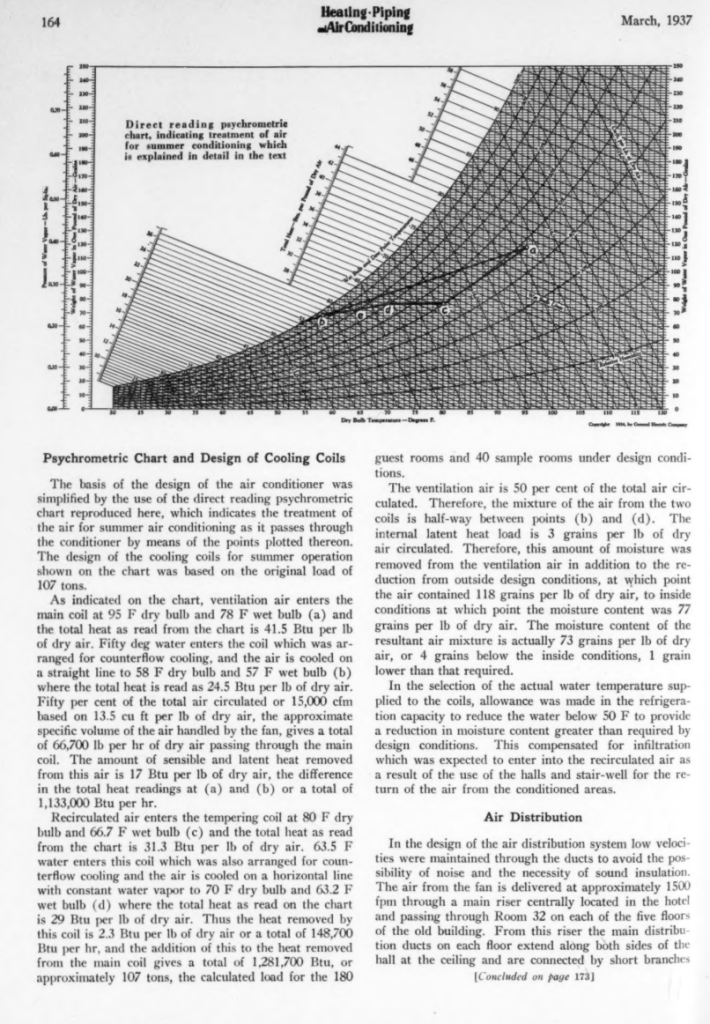
Back then, psychrometry was something only a select few truly mastered. It was Willis H. Carrier, the undisputed father of modern air conditioning, who presented his famous “Chart of the Properties of Air at Various Temperatures” at the annual meeting of the American Society of Mechanical Engineers (ASME), held in New York City that year.
From then on, engineers armed with rulers and protractors would carefully trace the paths of air across coils using technical pens. Nowadays, most of us work with software tools, but sometimes we still try to recreate those processes by hand. If you don’t know what a technical pen is, maybe you should check out Psychrometric Processes in Excel.
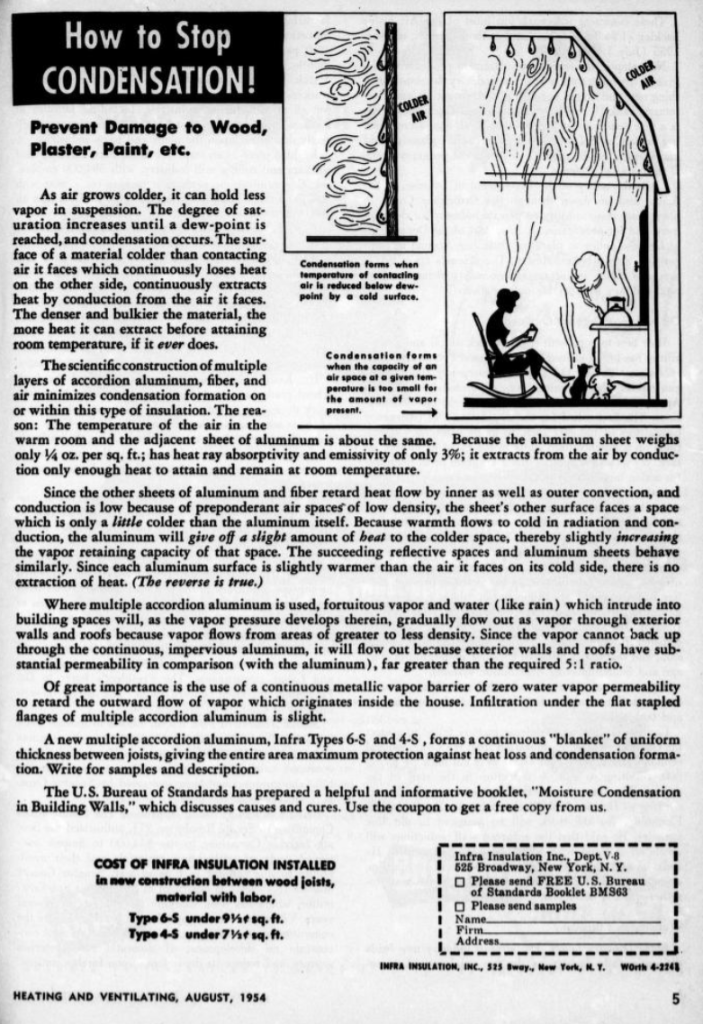
The folks who built my current house, a full fifty years after this ad came out, clearly decided these tips weren’t for them:
3. The origin of the “white room”
As I mentioned in an earlier post Introduction to History of Cleanrooms, cleanrooms were originally developed for the electronics and defense industries. What caught my attention is that they called them “white rooms”, which, funnily enough, is exactly how we refer to them in Spanish today—sala blanca.
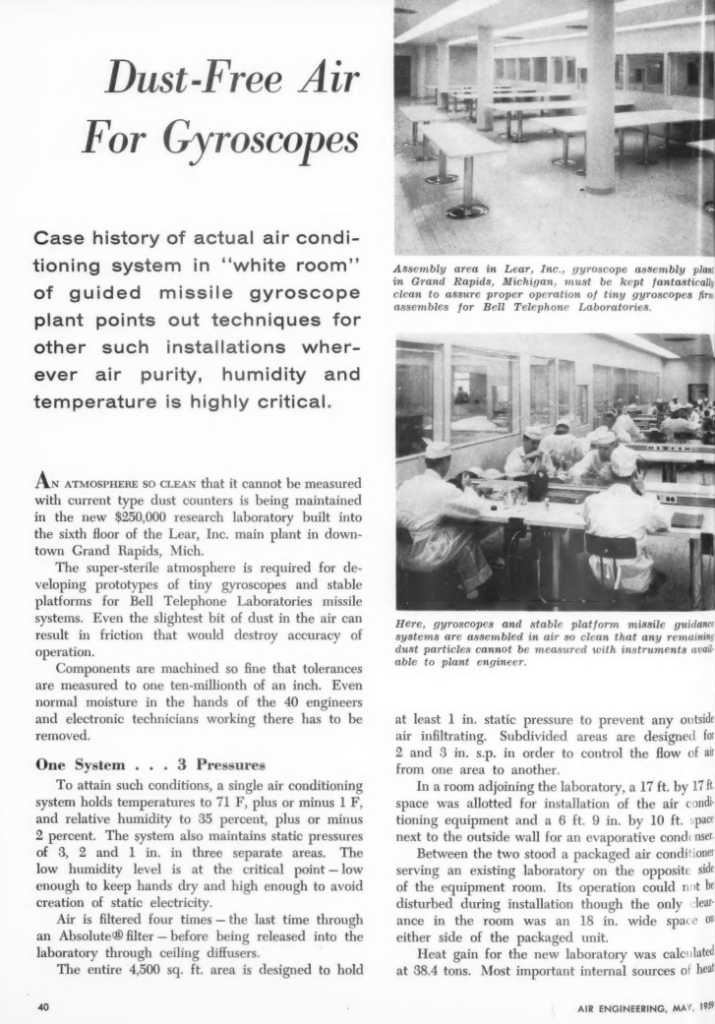
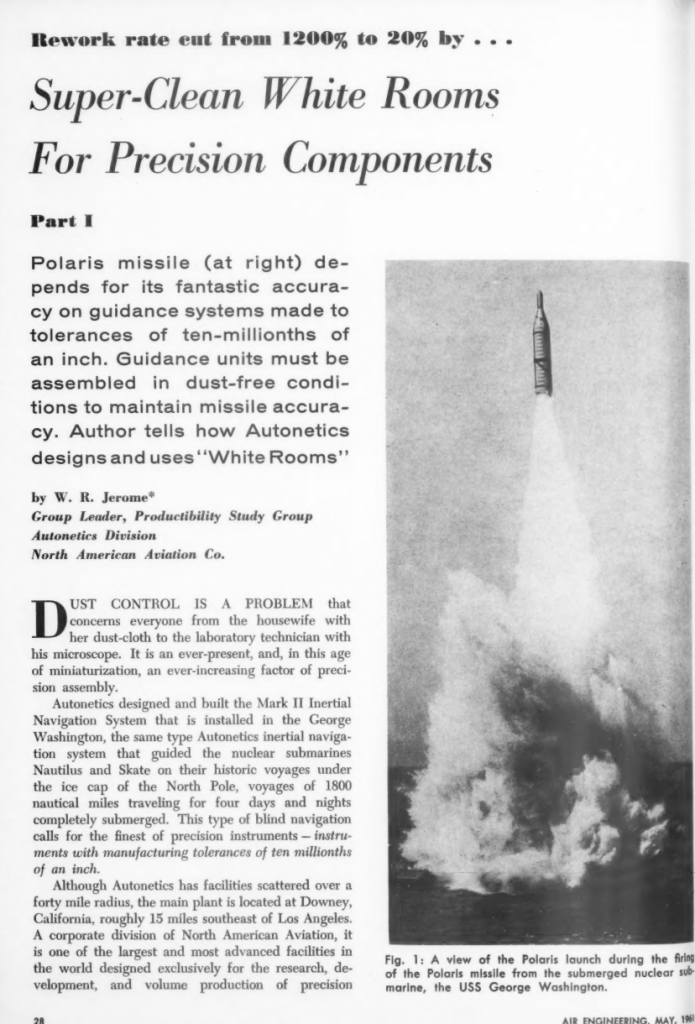
Missiles, unfortunately, were all the rage during the Cold War and helped to develop the cleanroom industry:
The pharmaceutical industry wasn’t usually the star of the show, but it popped up in plenty of ads whenever companies wanted to showcase quality.
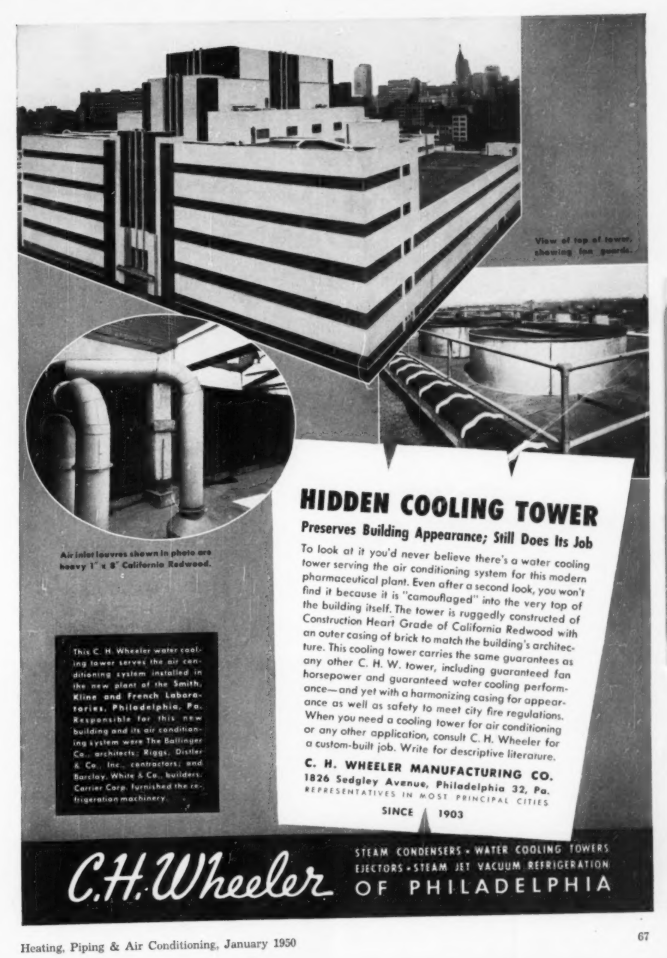
(Nowadays, very few pharmaceutical companies actually put this into practice.) The image above shows the facilities of Smith, Kline and French Laboratories, the direct predecessor—prior to mergers—of what is now GSK.
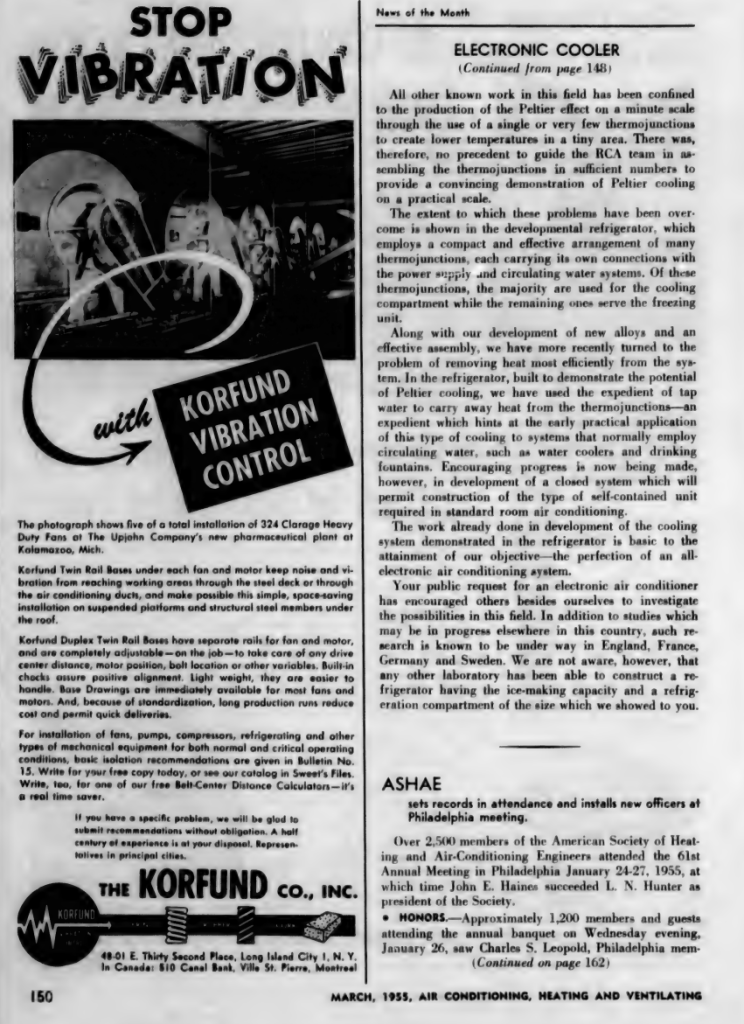
These big belt-driven fans (with external motors) were advertised as part of the new installations at Upjohn Company (which, after several mergers, would later become part of the Pfizer conglomerate).
4. The era of Freon
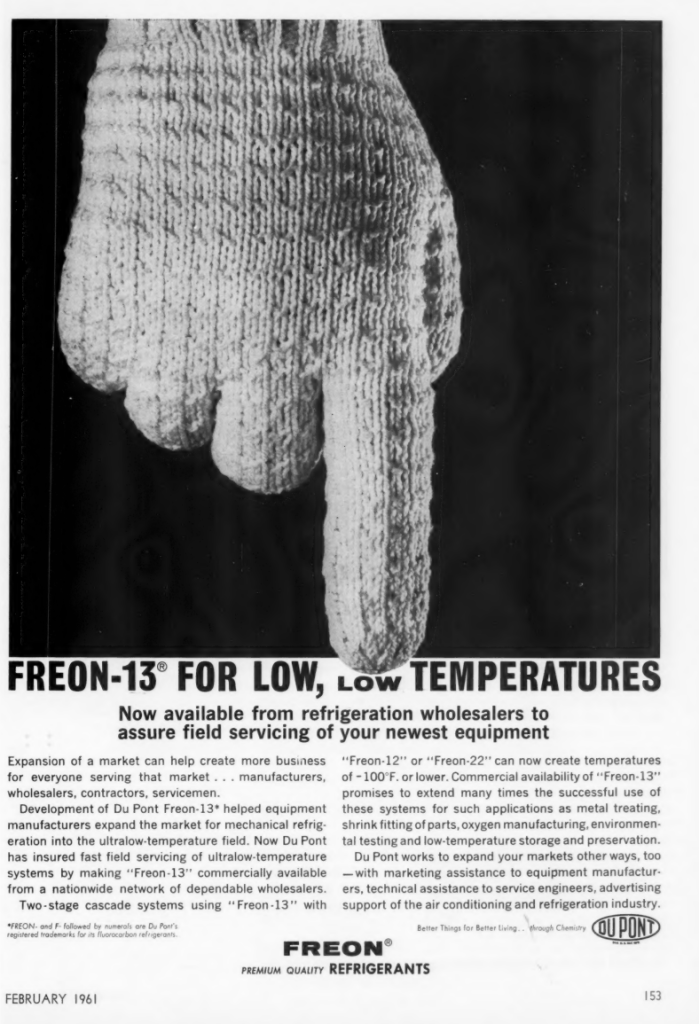
During the 1950s and 60s, Freon (chlorofluorocarbon or CFC compounds), developed by Dupont, revolutionized the refrigeration and air conditioning industry. Until then, systems used dangerous or unstable gases (like ammonia, sulfur dioxide, or methyl chloride), which carried risks of toxicity or explosion. Freon, on the other hand, was chemically stable, non-flammable, and non-toxic to humans, making it unbeatable.
However, decades later (in the 70s and 80s), scientists discovered that CFCs like Freon were damaging the ozone layer, which led to their gradual ban starting with the Montreal Protocol (1987).
If I were a climate change denier, I’d probably say that if it weren’t for GWP and that blasted Montreal Protocol, Freon would still be the unbeatable king of refrigerants.
… To be continued


No Comments