 Over 20 years of experience in Sterile, Biological Pharmaceutical and Hospital Facilities Engineering Design, Construction and Validation.


31 Jul Back to the Future. Cleanroom HVAC in the 50’s – Part Two
1. Introduction
In the first part of this article Back to the Future. Cleanroom HVAC in the 50’s – Part One, we took a DeLorean style trip back to the 1950s to discover the origins of cleanrooms. We explored how pharmaceutical environments evolved, looked at vintage HVAC engineering magazines, and learned about the birth of psychrometry, “white rooms”, and the era of freon as the king of refrigerants. Remember that all these magazines are available at www.archive.org
Additionally, this time, we’ll continue our journey through the pre-GMP era. Specifically, we’ll be exploring filtration, the origins of modern gowning, as well as the first steps toward today’s preventative maintenance practices.
Let’s get started.
2. The Pre-GMP Era
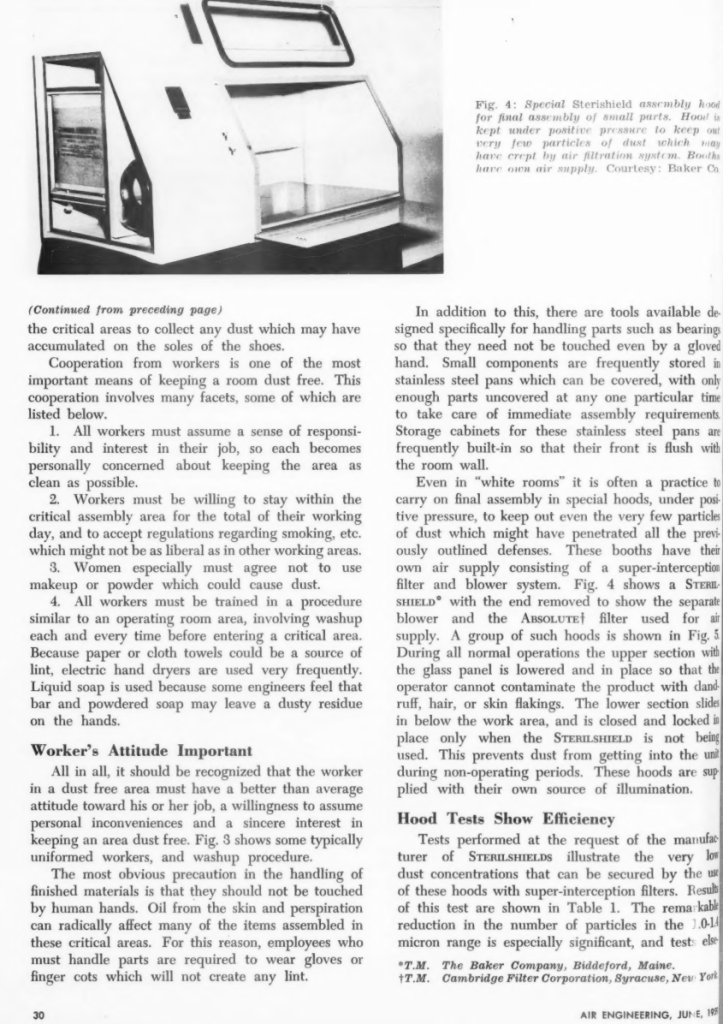
Before Good Manufacturing Practices (GMP) became the standard, pharmaceutical plants were already striving for environmental excellence. A fascinating example is the R. P. Scherer Corporation capsule factory in Detroit, highlighted in a 1959 technical magazine. Scherer, inventor of the gelatin capsule, would later become part of Catalent Pharma Solutions.
In those days, the word “cleanroom” rarely appeared in manuals. Yet, engineers were already applying advanced strategies to control temperature, humidity, and airflow during encapsulation processes. Their main goal was to guarantee product quality and prevent the gelatin from becoming brittle, rubbery, or useless. They designed air conditioning and drying systems that proved both clever and essential. They reused cold air multiple times, filtered out dust, and kept the environment within strict parameters—all without a single reference to “GMP compliance.”
Back then, innovation didn’t mean acronyms. It meant practical solutions: air conditioning for capsules, drying circuits, and humidity control systems to protect both product and budget. This was the pre-GMP era—less regulation, more creativity and know-how.
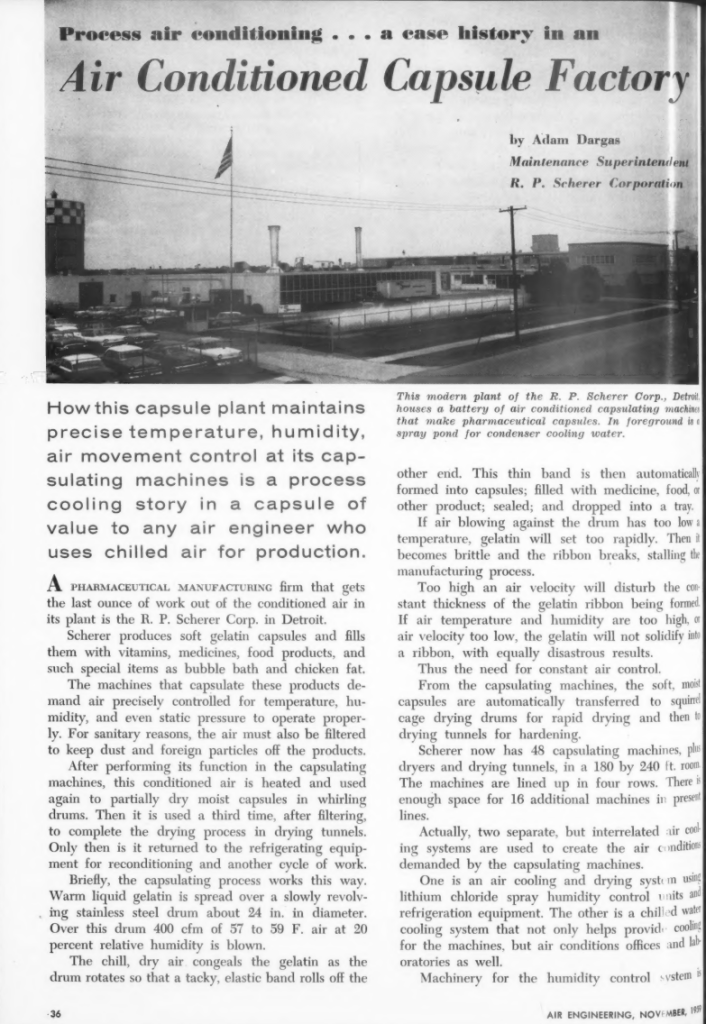
Cleanroom layouts in the pre-GMP era can be surprising to modern eyes. Take a look at this floor plan for a precision assembly area. There’s a meticulous pressure gradient—from the most critical zones (inspection and packaging) to less controlled areas. What’s truly curious is that toilets and the lunchroom appear inside the overpressurized zone, right next to laboratories and washrooms.
At that time, the focus was much more on protecting the product, rather than controlling personnel flow or cross-contamination risks.
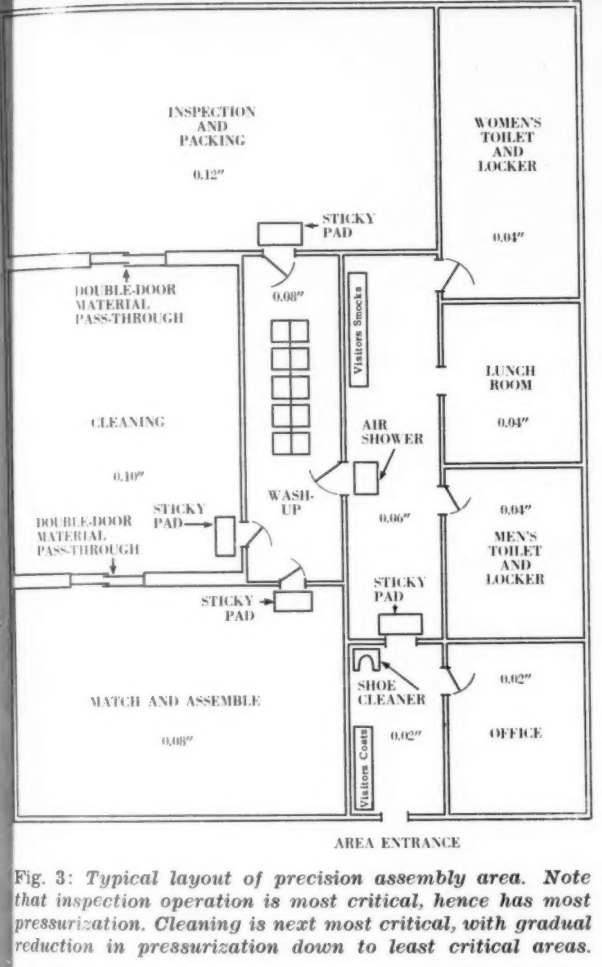
In early 1960s “white rooms,” attention to detail was everything. Aluminum benches lined the entire room and served as the hub for the most critical tasks, protected by absolute filters down to 2 microns. Even pass-throughs and material transfers were custom solutions, with sealed windows and mechanisms to prevent cross-contamination.
Room cleaning was up to the staff, who used special vacuums connected to wall sockets. All auxiliary equipment was placed outside and operated from inside with illuminated push-buttons, to minimize particle introduction. Gowning was a system in itself: polyester coveralls, caps, nylon shoe covers, and ever-present sticky pads at the entrance.
Facts: Air was renewed 20 times per hour, and humidity was kept below 40% with electrostatic and submicron filtration. Achieving top cleanliness in a pre-GMP world was truly a monumental effort.
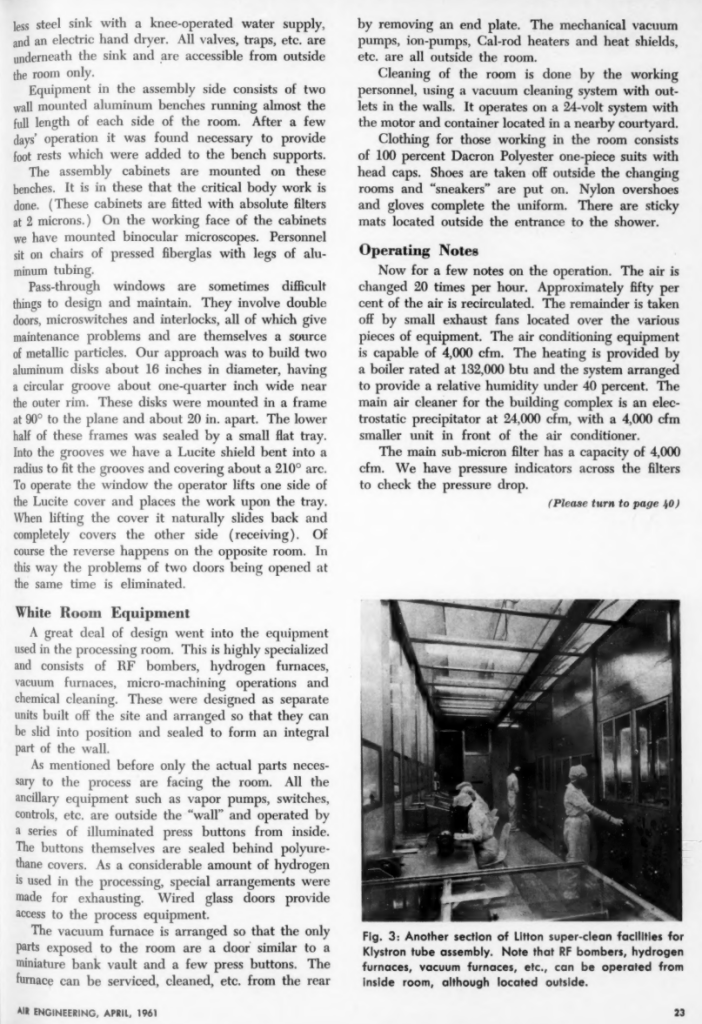
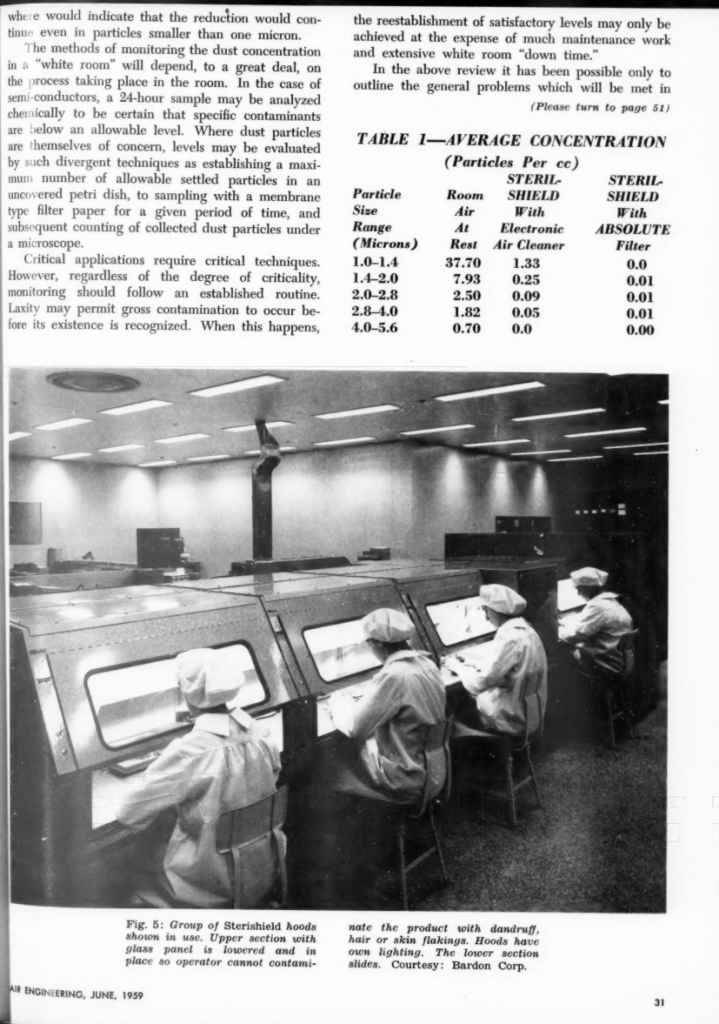
Long before modern laminar flow cabinets, ingenious solutions were already in place to reduce cross-contamination. A great example is the “Sterishield hoods” shown here. These were the true precursors to today’s laminar cabinets. Glass panels and built-in lighting protected the product, dramatically reducing the chance of operators contaminating it with dandruff, hair, or skin particles.
Panels would be lowered during operation, isolating both product and process. The lower part allowed for precise handling with minimal exposure. The obsession with control was so strong that particle counts were already measured in microns, and dust concentration was monitored using techniques that, although primitive compared to today, anticipated the modern concepts of clean zones and physical barriers.
3. Filtration
To illustrate this, a 1957 ad from American Air Filter (AAF) uses a cigarette filter as a metaphor, showing that “air filtering isn’t so simple!” While a cigarette filter has only one job (whether it actually works is another story), industrial air filtration, on the other hand, has always required much more. In fact, each process needs a specific solution—there’s no such thing as a universal filter.
Looking back, the ad seems almost surreal. But it’s a great reminder that the obsession with particle control and air quality has deep roots in pharmaceutical HVAC in the 1950s.

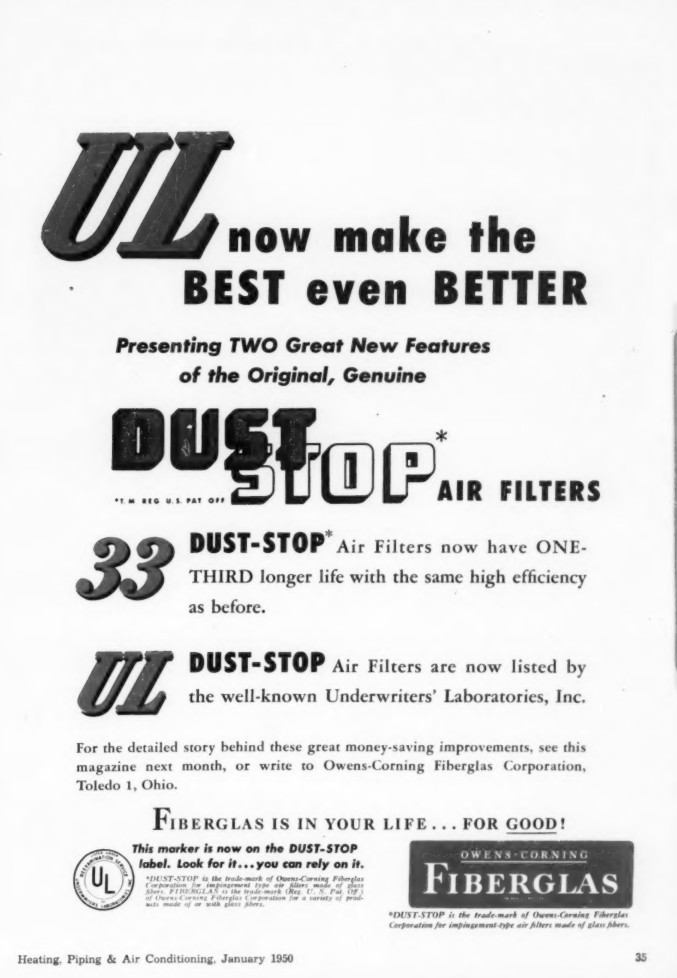
Competition in the filtration industry was fierce in the 1950s, and the marketing of products like DUST-STOP proves it. For example, ads boasted filters that lasted “one-third longer” while keeping the “same high efficiency.” Additionally, the slogan “Fiberglas is in your life… FOR GOOD!” summed up the era’s spirit: the rise of synthetics, faith in technology, and the promise of cleaner air.
It’s interesting to note that “filter lifetime” and efficiency were already key selling points. The UL logo was a mark of quality and reliability—even back then.
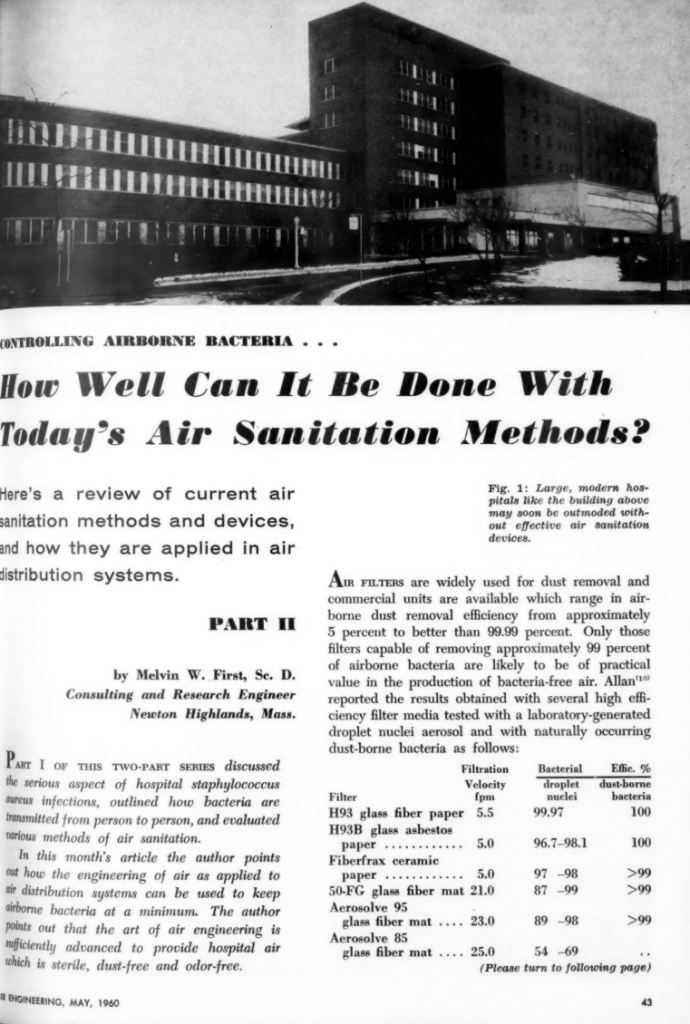
In 1960, controlling bacteria in hospitals was one of the greatest challenges in environmental engineering. Articles from that era examined “air sanitation” methods and the real effectiveness of different filters. Only filters capable of removing around 99% of bacteria were considered useful for truly sterile air. The range of materials used was remarkable—from glass paper and ceramics to asbestos (unthinkable today).
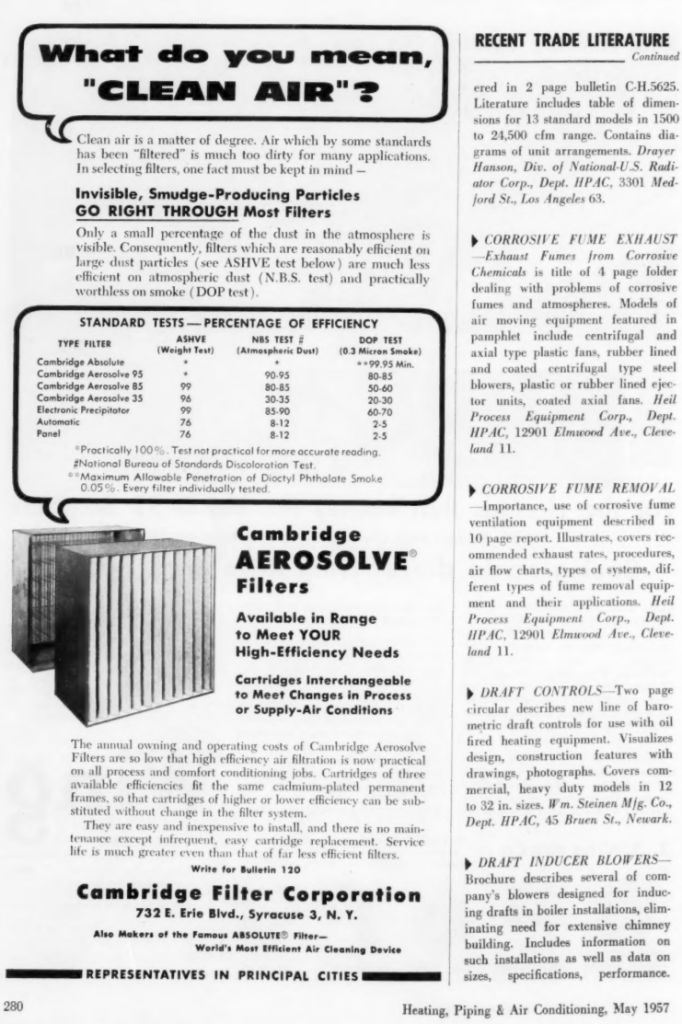
The Cambridge Absolute filter (over 99.95% in the DOP Test) from 1957 came very close to a modern HEPA H13 in terms of efficiency. It would be considered HEPA by today’s standards—although with more variability and without current leak-testing protocols.
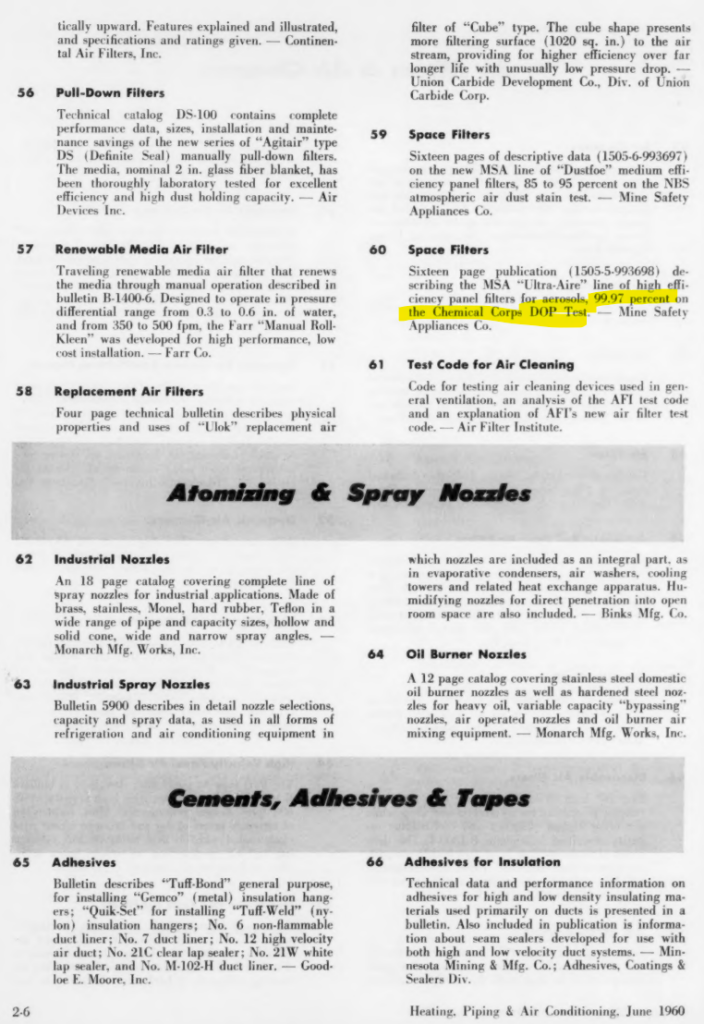
In the 1950s and 60s, marketing and technology went hand in hand. “Space” was the buzzword. High-efficiency aerosol filters, able to retain 99.97% in the DOP Test, were branded as “space filters.” The name was no accident: at the height of the space race, anything associated with rockets, satellites, or NASA technology meant innovation. These “space filters” were used in labs and hospitals, as well as in protecting the equipment and crews of the first space missions.
4. Instrumentation
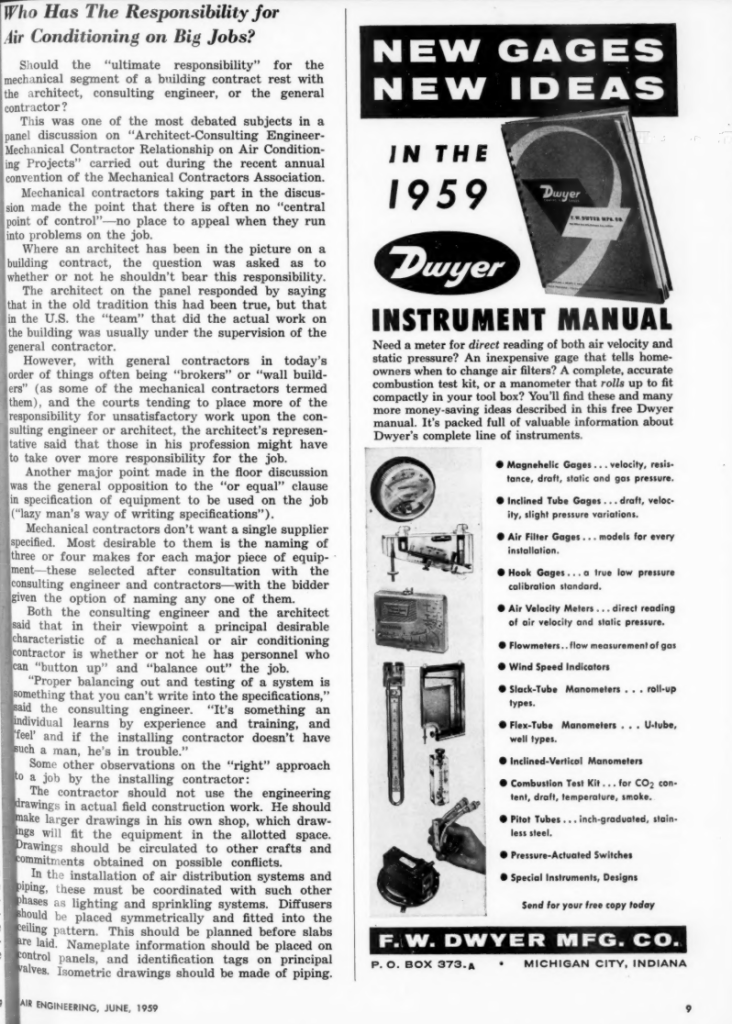
The Dwyer Magnehelic® is a true icon in HVAC instrumentation. This 1959 ad features a full catalog of “gages” (pressure and velocity gauges), just as accurate measurement was becoming vital for complex installations.
The first Magnehelic was patented by Dwyer in 1953 (U.S. Patent No. 2,740,195, granted April 3, 1956). It quickly became the industry standard. What’s amazing is how little the Magnehelic has changed in seventy years. If you still have an old one, it probably works just as well as the day it was made!
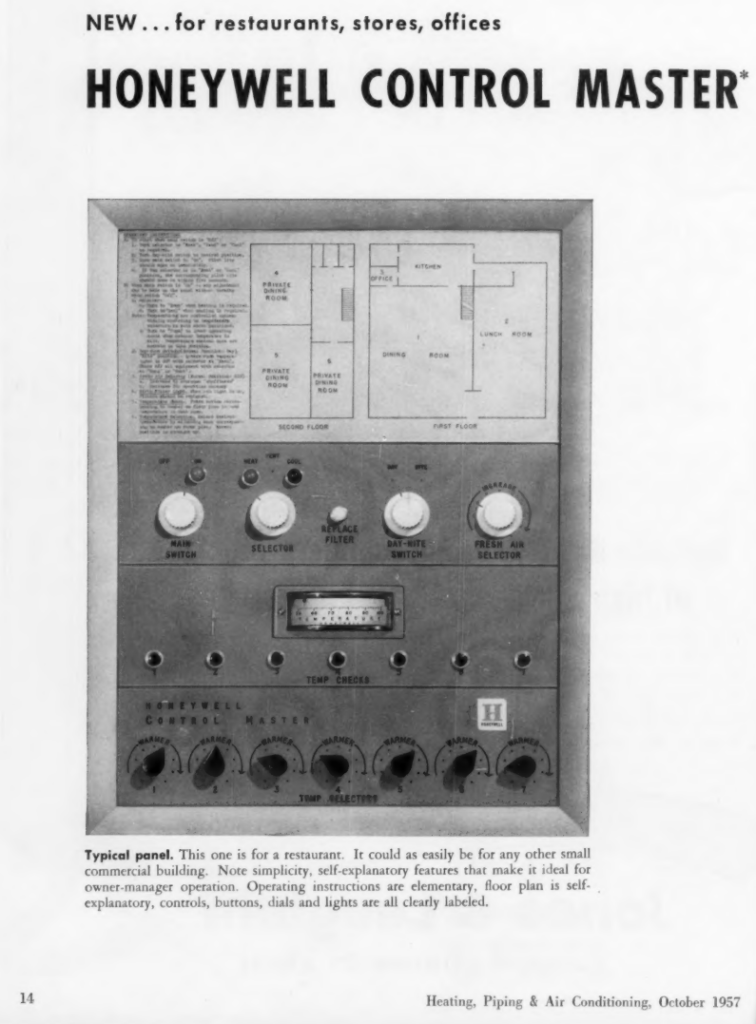
Before touchscreens and digital HMIs, facility control relied on panels like the Honeywell Control Master from 1957. Designed for restaurants and small commercial buildings, it already included features we associate with modern user interfaces:
Integrated building layout for a global overview.
Dedicated controls for each parameter (temperature, ventilation, day/night schedules).
Clearly labeled visual indicators and dials.
Even a “replace filter” alert—a real revolution for its time.
In fact, the design aimed to be “self-explanatory,” so anyone could operate and monitor the system with minimal training. Features included integrated building layouts, dedicated controls for each parameter, and even a “replace filter” alert—a real revolution for its time. Such innovations made these panels much more user-friendly than anything that had come before.
The approach was truly revolutionary for its time. Indeed, it’s fascinating how usability and user experience were priorities long before PLCs and SCADA systems.
4. Gowning
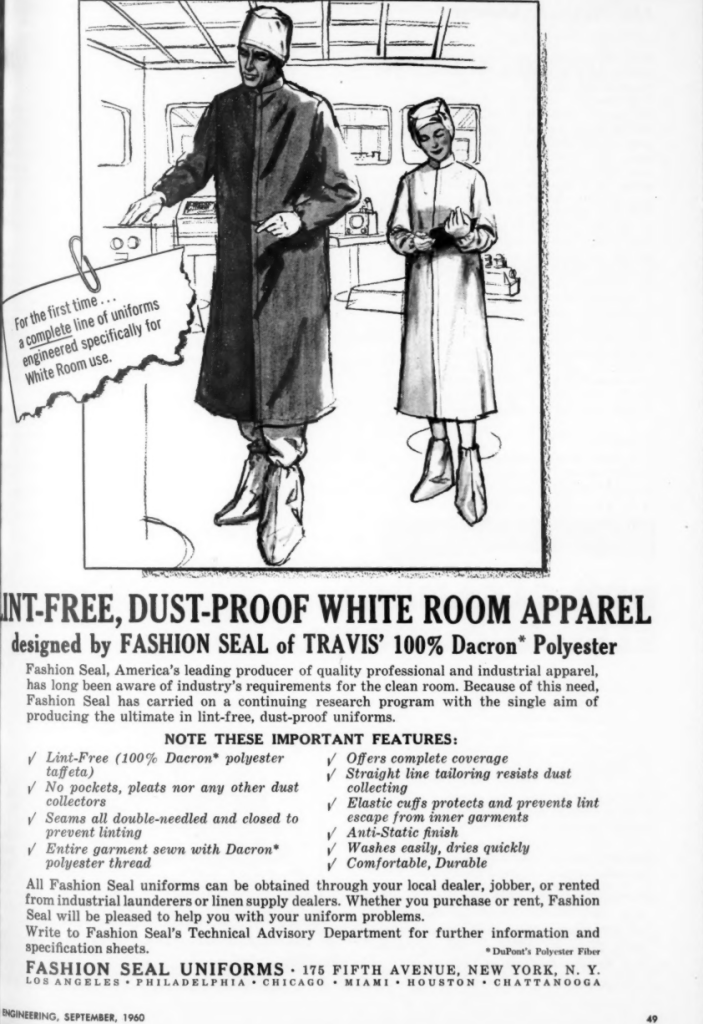
Dacron® polyester fiber was launched commercially by DuPont in 1951. Subsequently, its use in cleanroom garments began to rise at the end of that decade, especially in high-precision industries like pharmaceuticals, optics, and microelectronics.
Previously, lab coats and uniforms were usually cotton or rayon blends. However, these fabrics shed fibers (“lint”), creating challenges in environments that demanded extreme cleanliness.
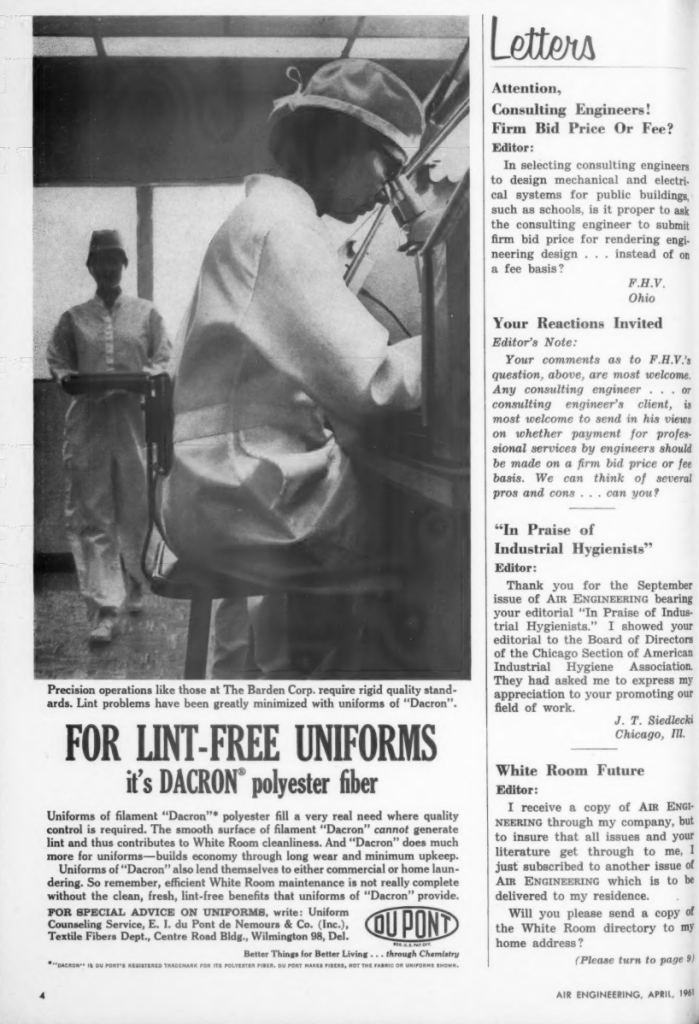
Early ads detailed each advancement we now take for granted but that were true innovations at the time:
Lint-free fabric
No pockets or folds to collect dust
Closed and reinforced seams
Anti-static finishes
Easy washing
Full coverage, including elastic cuffs to keep lint from underwear from escaping
Clearly, cleanliness and protection in critical environments depended on more than just ventilation or filters—clothing was key
Moreover, practicality also played a role, with options to wash or rent uniforms that anticipated today’s garment management models.


No Comments